How to Start a Neighborhood Tool-Sharing Group in a Rural Town
October 10, 2026 - Community

October 03, 2026 - Countryside
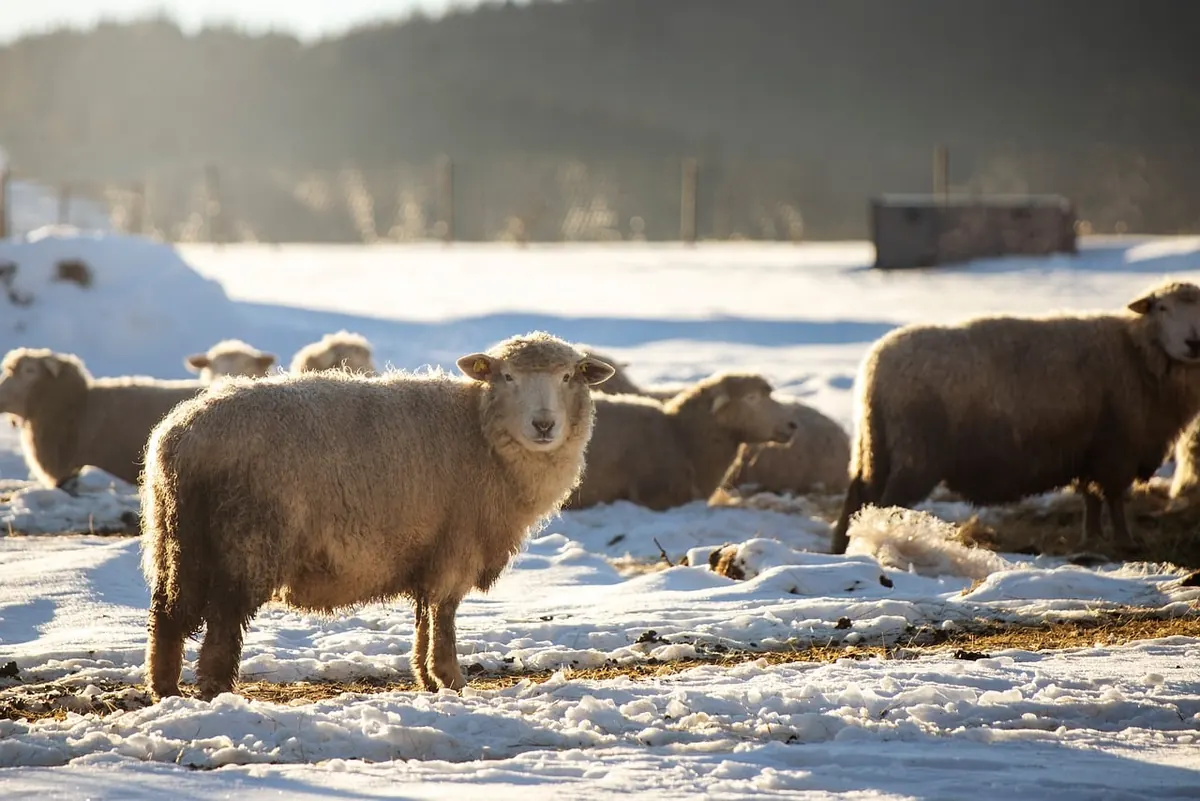
A good fence does two jobs at once: it keeps your animals where you put them, and everything else out. Get it wrong and you spend your mornings chasing goats down the road or counting hens that never came back to the coop. Get it right and the fence disappears from your daily thoughts for the next decade. The hard part is that the animal, the land, and your budget rarely agree with each other.
Before you price a single roll of wire, be honest about what you're containing. Goats and sheep look similar from a distance and behave nothing alike at a fence line.
Goats climb, lean, and rub. They will stand on a wire until it sags, then step over the sag. They also push their heads through openings that look far too small, which is how you end up with a stuck goat and a bent fence. If you keep goats, the vertical spacing matters as much as the height.
Sheep are calmer but harder in one specific way: wool insulates them. A sheep that brushes a hot wire may feel nothing at all, and a sheep that can't see a fence will walk into it. They need something visible and physical, not just a psychological barrier.
Poultry are a different problem entirely. Keeping chickens in is easy. Keeping foxes, raccoons, coyotes, and hawks out is the real job, and no single fence does all of it. Ground predators dig, climbers go over, and hawks ignore fences completely.
Woven wire, often sold as field fence or sheep-and-goat fence, is the backbone of most small-livestock setups. The version made for goats and sheep has graduated horizontal spacing — tighter at the ground, wider toward the top — with vertical wires spaced four to six inches apart. Standard cattle field fence has wider squares, and a goat will happily wedge its head through one.
Installation is where woven wire earns or loses its reputation. Corners, gates, and every major change in direction need proper bracing — an H-brace or a floating brace set in concrete or packed rock. Line posts usually go every eight to ten feet, closer on curves and slopes. Stretch the wire tight with a come-along or a stretcher bar before stapling; loose wire invites animals to climb it.
What you get for the effort is a fence that needs no power, works in frozen ground and dry weather, and lasts for decades if the corners hold. It's also the most expensive permanent option per foot in materials, before you count the labor of setting posts.
Electric fencing works on psychology, not strength, and it's the least expensive way to cover a lot of ground. The catch is that the first encounter has to be memorable. A well-grounded energizer delivering a real jolt teaches an animal in one lesson; a weak one teaches them the fence is a suggestion.
Size the energizer with headroom. A box rated for a certain distance assumes a single clean wire, ideal conditions, and no weeds touching it. Add strands, add distance, add tall grass in July, and that rating shrinks fast. Grounding is where most failures hide: drive at least three ground rods, spaced several feet apart, in soil that stays damp.
Barbed wire is cheap, widely available, and made for cattle. For small livestock it's a poor fit. Wool catches and tears on the barbs, and an entangled sheep is a serious problem. Goats rub against it and push through the gaps between strands. For poultry it's useless as containment and a hazard to birds that brush against it.
There's a second consideration: some municipalities and planned rural subdivisions restrict barbed wire, particularly along property lines or near roads. If you're on a small parcel or in a rural-residential area, check local rules before you buy a roll. Where barbed wire does earn its place is as a top wire on an existing cattle perimeter, or a cheap divider between large pastures. It isn't a small-livestock fence.
Electric netting comes in rolls with posts built into the mesh, and it moves with you. For rotational grazing with sheep or goats, or for running poultry across a garden, it's hard to beat. The smaller-mesh poultry versions are the only practical portable option for birds.
The trade-offs are real. It has to be moved before the grass grows into it and shorts it out. It tangles if you roll it up sloppily, and it costs more per foot than a single strand of permanent wire. But it's reusable, it needs no post driving, and it lets you try livestock before committing to a permanent fence line. For someone testing whether goats fit their land, that's worth a lot.
Comparing fence prices by the roll is misleading. The wire is often the smaller half of the bill. What drives the total:
Roughly speaking, for the same length of fence, barbed wire is the least expensive material, single-strand electric wire is close behind it, electric netting costs more per foot but can be moved and reused, and woven wire sits at the top of the permanent options. Steel, lumber, and freight prices move around, so get quotes from two local suppliers and one installer before you commit. Fence pricing is regional enough that a national estimate is nearly useless.
If you're starting from bare ground, work in this sequence:
Then train the animals. Put new stock in a small, well-fenced paddock for a few days with feed and water, so their first contact with the fence happens at a walk rather than a panic. Walk the line weekly for the first month. Most escapes trace back to a sagging gate, a spot where a branch fell on the wire, or a corner brace that was never quite right.
For zoning, setbacks, and any insurance questions about fencing livestock on your property, check with your local planning office — the rules vary more than most people expect. And if an animal does get tangled or cut, call a veterinarian rather than guessing at treatment.
Build the perimeter once and build it well, and the fence becomes the quietest part of the farm. That's the goal: a boundary you stop thinking about because it simply works.
Photo: katerinavulcova / Pixabay
A practical guide to starting a rural tool-lending library: how to survey interest, choose a structure, build a...
A seasonal routine of grading, drainage care, weed control, and small repairs keeps a gravel driveway smooth, firm,...
Copyright © 2026 Humble Vale. All Right Reserved.